Instrumentation and Technical Support Department
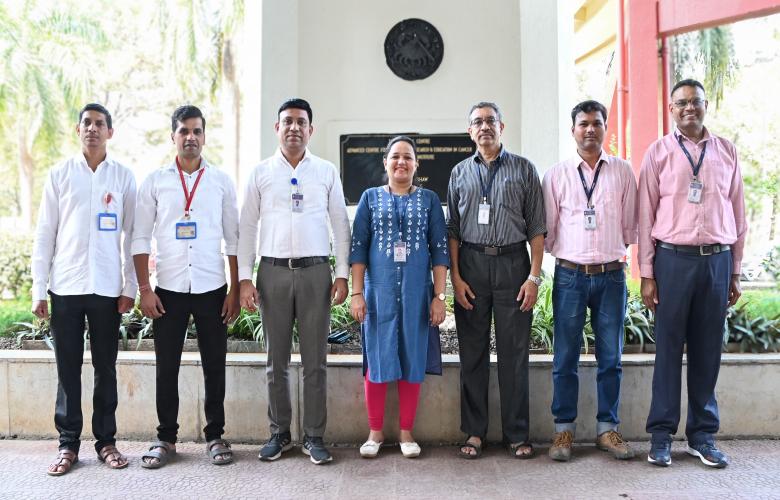
The ‘Instrumentation and Technical Support Department’ serves as a centralised facility for Advanced Scientific Instrumentation and analytical services, designed to support multidisciplinary research in cancer biology. The department provides access to state-of-the-art equipment for characterization, analysis, and testing, enabling students and research scholars to carry out high-quality experimental work efficiently.
The department aims to promote a culture of shared resources and optimal utilization of equipment by offering sophisticated instruments to in-house departments and external institutions. By integrating cutting-edge technology with expert technical support, the facility enhances research capabilities across diverse labs. In addition to routine analytical services, it facilitates hands-on training to help users gain technical expertise and ensure the optimal use of resources. The department operates on a transparent, user-friendly booking system to maximize accessibility and efficiency.
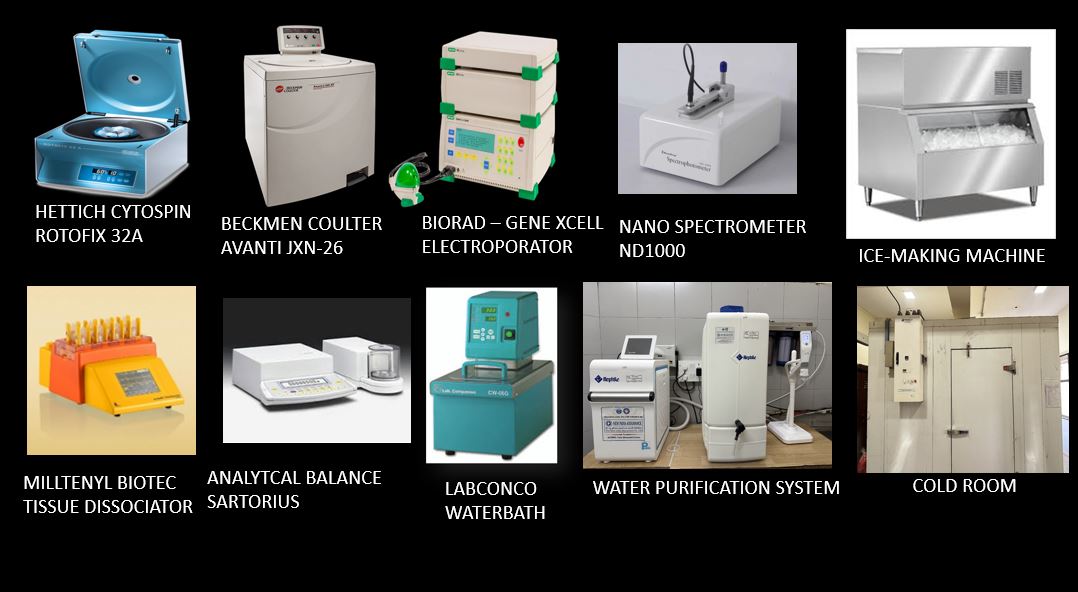
All major equipment installed in the department have been covered under an annual maintenance contract in order to provide safe, sustainable, efficient and reliable facilities. The department has a dedicated team of technical experts, who provide necessary technical support to all the equipment installed at other research labs and facilities of the CRI to maintain the equipment in working condition and to reduce downtime of the equipment. Dedicated team of technicians also perform in-house testing, periodic preventive maintenance and calibration, spare part inventory management of the equipment.
The department also provides technical support in the procurement, installation, and commissioning of the equipment by preparing technical specifications, technical evaluation of the tenders, installation site preparation, warranty claims, asset management, Repair work orders.
Overall, the ‘Instrumentation and Technical Support Department’ plays a vital role in fostering scientific excellence through the effective utilization of shared research infrastructure.
MULTIMODE MICROPLATE READER - BIOTEK CYTATION 5
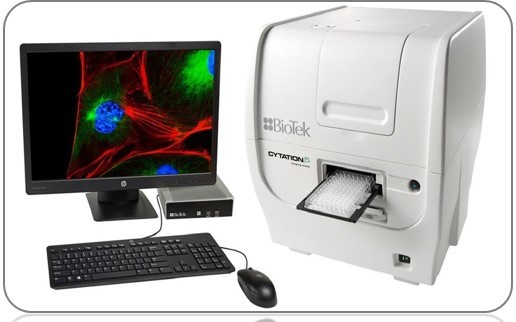
A multimode microplate reader is a versatile laboratory instrument that analyzes multiple samples simultaneously in a microplate using multiple detection methods. These complex optical instruments are essential for high throughput screening in the life sciences and pharmaceutical research enabling researchers to quantify biological and chemical reactions and properties in various assays, including drug discovery, cell proliferation, and gene expression
Technical Features:
| Automation | Fully Automatic |
| Detection Method | Absorbance, Luminescence and Fluorescence detection |
| Multiple Reading | Yes |
| Read methods | Endpoint, kinetic, spectral scanning, well area scanning |
| Temperature control | 4-Zone incubation to 65°C with Condensation Control; +0.2°C at 37°C |
| Wave length Range | 230 nm to 999 nm. |
MULTIMODE MICROPLATE READER - BMG LABTECH CLARIOSTAR PLUS
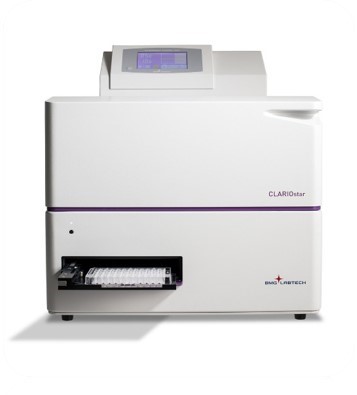
A wide range of life science applications, including cell based assays, metabolic analysis (oxygen consumption, pH, ROS), enzymatic assays, quantification (RNA, protein), and reporter gene assays. It offers flexibility through high performance monochromator and tunable dichroic mirrors, a dedicated spectrometer for high resolution spectral scanning and atmospheric control to simulate physiological conditions.
Technical Features:
| Automation | Fully Automatic |
| Detection Method | Absorbance, Luminescence and Fluorescence detection |
| Multiple Reading | Yes |
| Read methods | Endpoint, kinetic, spectral scanning, well area scanning |
| Temperature control | 4 Zone incubation to 65°C with Condensation Control; +0.2°C at +37°C |
| Wave length Range | 230 nm to 999 nm. |
MICROPLATE READER - BIOTEK EPOCH 2
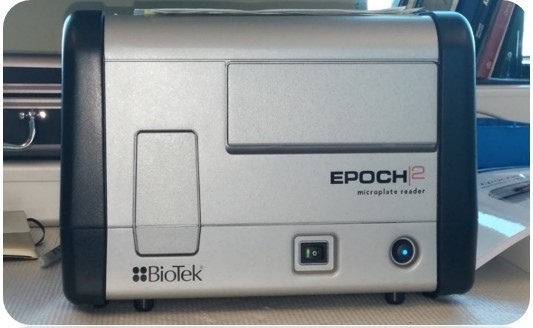
A microplate reader is a laboratory instrument that quantifies chemical, biological, or physical changes within the wells of a microplate, a multi-well plate used for high-throughput screening. It detects and measures optical signals like absorbance to analyze multiple samples simultaneously, saving time and costs for researchers in the life sciences and pharmaceutical industries.
Technical Features:
| Automation | Automatic |
| Multiple Reading | Yes |
| Read methods | Endpoint, kinetic, spectral scanning, well area scanning |
| Wave length Range | 200 nm to 999 nm. |
MICROLITER SPECTROMETER - DENOVIX DS11+
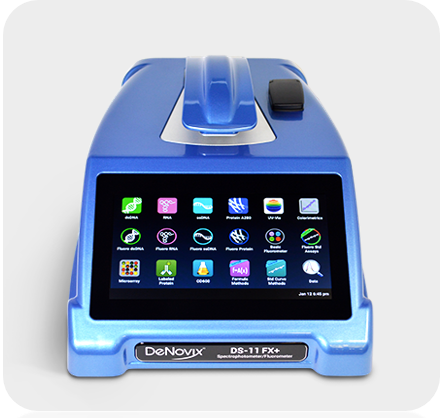
A microliter spectrophotometer is used to quickly measure the concentration and purity of biological samples, such as DNA, RNA, and proteins, by analysing their light absorbance in just 1-2 microliters of liquid. It works by placing a small sample onto a measurement pedestal, where surface tension forms a liquid column between two fibre optics that passes light through it. The instrument then measures the light absorbed at various wavelengths, which indicates the sample's concentration and the presence of contaminants, allowing researchers to assess sample quality for experiments.
| Fluorescence | UV / Blue, Red, Green |
| Absorbance Range | 190 – 840 nm |
| Wavelength accuracy ( Absorbance ) | 0.5 nm |
| Micro volume path length | 0.5 to 0.02 nm |
CHEMIDOC IMAGING SYSTEMS - BIO RAD MP
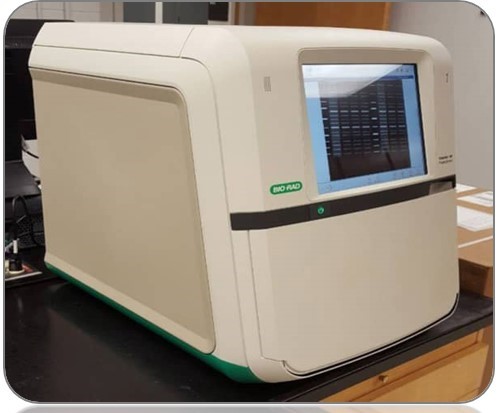
The ChemiDoc imaging system from Bio Rad is used to image and document gels and western blots. The ChemiDoc imaging system is compatible with a wide range of gel stains, including Ethidium bromide, SYPRO Ruby, Coomassie, and Silver stains. The ChemiDoc Imaging System provides fast, reliable, and sensitive imaging and documentation of gels and Chemiluminescence western blots. This system is compatible with stain free technology.
Technical Features:
| Smart Tray Technology™ | Automatic recognition of application specific tray and adjustment of imaging . |
| Autofocus | Recalibrated focus for any zoom setting or sample height |
| Auto exposure | Two user defined modes (rapid or optimal auto exposure) for all blot and gel imaging applications |
GELDOC IMAGING SYSTEMS - BIO RAD GO IMAGING
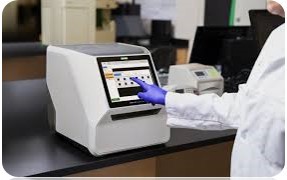
The GelDoc Go Imaging System gives you a benchtop imaging solution in a compact and evolved package Acquire high resolution, publication quality images of both nucleic acid and protein gels
Technical Features:
| Smart Tray Technology™ | Automatic recognition of application specific tray and adjustment of imaging . |
| Autofocus | Recalibrated focus for any zoom setting or sample height |
| Auto exposure | Two user defined modes (rapid or optimal auto exposure) for all blot and gel imaging applications |
SHAKER INCUBATOR - LAB COMPANION ISS 3075R
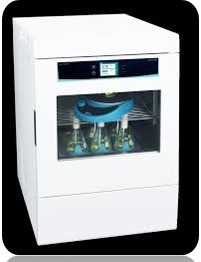
Best space efficient model with double stacking Up to 80°C, 500 rpm enables setting of various experimental conditions. Utilized as an incubator using the shelves Three operating modes Temperature Shaking, Temperature, or Shaking Includes internal power outlet Shaking structure with minimized vibration.
Technical Features:
| Temperature Range | +5°C to +80°C |
| Rotation Range (RPM) | 10 RPM to 180 RPM MAX. |
SHAKER INCUBATOR - INNOVA 44R
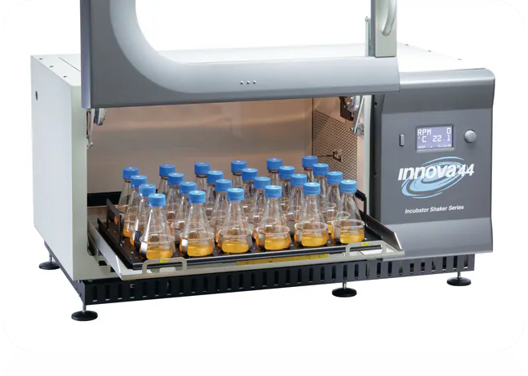
A Lab Companion incubator shaker is a laboratory instrument that controls temperature and provides mechanical agitation for incubating samples like microorganisms, cells, or enzymes. These devices are used in fields such as biotechnology and microbiology to facilitate growth and cultivation by providing a controlled environment for heating and shaking at user set speeds and temperatures.
Technical Features:
| Temperature Range | Ambient -10°C to +80°C |
| Door opening | Glide up |
| Speed Range | 25-400 rpm with 2.5 cm orbit; 25-300 rpm with 5.1 cm orbit or 2 stacked units; 25-250 rpm for 2 stacked units |
PCR MACHINE (THERMAL CYCLER) - HIMEDIA AND PROFLEX
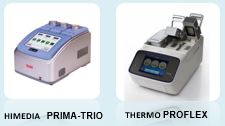
A PCR machine amplifies specific DNA or RNA segments from samples, which is essential for applications like detecting genetic diseases, identifying pathogens (e.g. viruses), forensic DNA analysis, paternity testing, and gene cloning. It achieves this by rapidly cycling through controlled temperature changes to replicate target genetic material, a process known as Polymerase Chain Reaction (PCR)
Technical Features:
| TYPE | Multi block Gradient Thermal Cycler |
| Block | 3 x 32 well block |
| GUI | Graphical touch screen |
REAL TIME PCR SYSTEM - QUANT STUDIO 5
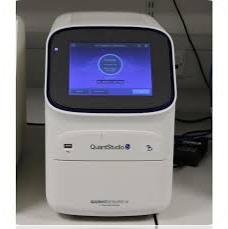
The Applied Bio systems Quant Studio 5 Real Time PCR System is designed for Proven OptiPlex technology (six decoupled channels/ 21 filter combinations with white LED) yield optimum results.
Technical Features:
| Display type | touchscreen |
| Format | 384 well plate |
| Volume | 100 µL |
PROBE SONICATOR - BRANSON 450 DIGITAL
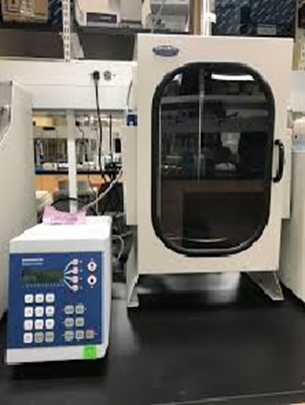
A probe Sonicator is a laboratory instrument that uses high frequency ultrasonic energy to process liquid samples, commonly for disruption, dispersion, and mixing. It works by converting electrical energy into intense vibrations transmitted through a metal probe directly into the liquid, creating cavitation bubbles that cause intense shearing and mixing. This allows for applications like breaking open cells, preparing nanomaterials, and creating emulsions.
Technical Features:
| Frequency | 25KHz |
| Pulse Mode | Allows for ON and OFF cycles, adjustable from 1 second to 59 seconds, to prevent overheating. |
| Power | 100-1500W |
DIAGENODE SONICATION SYSTEM - BIORUPTOR PICO
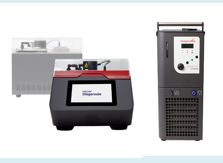
A Bioruptor is a laboratory device that uses focused ultrasound and controlled cavitation to create mechanical stress, primarily for shearing biomolecules like DNA and chromatin, but also for disrupting cells, homogenizing tissue, dispersing chemical components, and reducing the size of liposomes.
Technical Features:
| FREQUENCY | 20 KHz-60 KHz |
| POWER | 1000 watts |
| TEMPERATURE | +4°C to +20°C |